
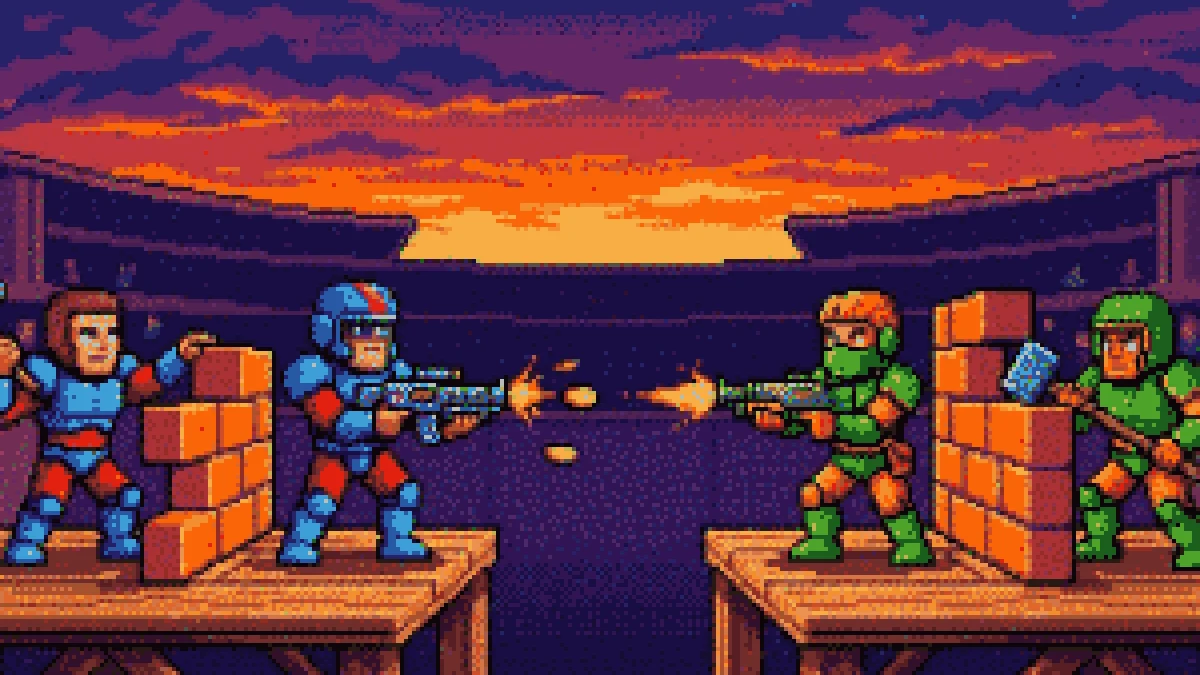
2v2 LOL takes the build-and-shoot duel and adds the one thing a 1v1 can never have: someone who can look the other way. That sounds like a small change and it is not. Materials, height, and even which fights are worth taking all work differently when there are four players in the arena. Here is what actually changes, and how to be the teammate people want.
The core difference: you can be covered
In a 1v1, every second you spend building is a second you are not shooting, and every second you spend shooting is a second your build is not going up. In 2v2 those can happen at the same time — one player builds the structure while the other holds the angle. A duo that splits those roles beats two players who each try to do both.
Decide it out loud, early: who takes height, who covers the ground. It does not have to be the same person every fight, but it does have to be decided before the fight, not during.
Positioning: close, but not stacked
The classic new-duo mistake is standing on the same tile. One well-placed shot, one explosive, one player taking height above you, and both of you are in trouble at once. The right spacing is close enough to trade covering fire, far enough that no single angle sees both of you — roughly one build apart, on different levels if you can manage it.
The other classic mistake is the opposite: splitting so far that you are effectively playing two 1v1s while the other team plays an actual 2v2. If you cannot reach your teammate in about two seconds, you are too far.
Focus fire is the whole game
Two players shooting different opponents deal the same damage as two players shooting the same opponent — but only the second version removes someone from the fight. Call your target and commit. A 2v1 lasts a few seconds; a pair of simultaneous 1v1s lasts until someone makes a mistake.
Materials become a shared resource
In a duo, whoever is building spends materials at roughly twice the rate of a solo player, while the one holding the angle spends almost none. That imbalance is normal and it is the covering player's job to fix it:
- Harvest during downtime, not just at the start.
- Break the enemy structures you just fought through — it is free material and it removes their cover.
- If your partner is dry and you are full, drop back and let them take the covering role for a while.
The revive window changes your risk maths
Because a downed teammate can come back, aggression that would be reckless in a 1v1 becomes reasonable — but only when your partner is up and close. The two rules that follow:
- Never push while your teammate is down. Box them up, hold the angle, and pick them up. A 1v2 you started is a 1v2 you lose.
- Do not revive in the open. Wall, floor, cone, then revive. Four pieces and three seconds beats a heroic pickup that gets you both killed.
Communication without voice chat
Plenty of duos are strangers with no mic. You can still communicate:
- Build toward where you want them to go. A ramp is a suggestion.
- Shoot the player you want focused, even at range — tracers are a callout.
- Back off visibly rather than dying alone; a partner who sees you disengage usually follows.
Practise the solo skills anyway
Everything in 2v2 rests on the same foundation: taking and holding height, boxing and editing under pressure, and not running out of wood. Duos amplify those skills; they do not replace them.
The mode switch above the player flips between the two builds — play 2v2.LOL and 1v1.LOL back to back and the difference is obvious in one match.